Sorry, this content is not available. Check out other listings in this category.

Best Investing Blogs Worth Following

Last Updated: 28/06/2026

Most investing blogs just react to the day's headlines. The ones below do original research, not recycled takes. You will find market analysis, stock ideas, and personal finance advice. Each is run by analysts, fund managers, or longtime writers who know the subject.

Submit Your Blog

Our team reviews Investing Blogs using clear editorial standards focused on quality, expertise, and reliability.

  • Financial credibility and editorial fact-checking standards
  • Depth of market analysis and quality of data sourcing
  • Author expertise and relevant industry background
  • Publishing consistency and how current content stays
  • Aggregate satisfaction signals from independent sources

Rankings are determined independently based on public information and editorial research.

Find the Top Investing Bloggers

x

Top-Rated Investment Blogs for Stocks, Markets & Personal Finance

Screenshot of the Motley Fool Blog

The Motley Fool is one of the longest-running investing blogs in the US. The site has shared stock market news and personal finance guidance for more than 25 years.

You will find daily market coverage, stock analysis, and beginner guides on how to invest in stocks, ETFs, and index funds. The team also runs paid services like Stock Advisor for members who want regular stock picks.

Founders Tom and David Gardner built the brand around a simple goal: helping everyday people make smarter money decisions. Coverage spans growth stocks, dividend stocks, crypto, and retirement planning.

Their "Smarter, Happier, and Richer" approach keeps the writing plain and useful for new and seasoned investors alike.

Screenshot of the Value Walk Blog

Founded by Jacob Wolinsky, ValueWalk built its name on value investing and hedge fund coverage. The site started as a personal blog and grew into a widely read financial news outlet.

You will find reporting on hedge funds, asset managers, and famous investors, plus stock ideas rooted in the Benjamin Graham school of thought. ValueWalk also covers personal finance, since the basics matter before you pick a single stock.

Articles range from market news and earnings to long-term wealth-building strategies. The outlet is known for tracking smaller funds that bigger media tend to ignore.

Podcasts and newsletters round out the mix for readers who want deeper market insight.

Screenshot of the Calculated Risk Blog

Bill McBride built Calculated Risk into a top economics and finance blog, best known for its focus on the housing market. He flagged the housing bubble well before the 2008 crash.

After 21 years of near-daily posts, McBride now shares his analysis through weekly economic and real estate newsletters. The blog remains a go-to source for data-driven takes on GDP, employment, and home prices.

Screenshot of the A Wealth of Common Sense Blog

A Wealth of Common Sense covers personal finance, investments, and markets in plain, no-hype language. Ben Carlson, a CFA and author, started the blog to help regular investors.

Posts tackle topics such as diversification, retirement planning, and market behavior. Carlson also co-hosts the Animal Spirits podcast and has written several books on investing.

Screenshot of the Modest Money Blog

Jeremy Biberdorf launched Modest Money in 2012 to share his own investing experience. Today the site reviews brokers, robo-advisors, charting tools, and trading platforms.

You will also find guides on dividend investing, day trading strategies, and prop trading firms. The focus stays on practical investing education for everyday people, not Wall Street pros.

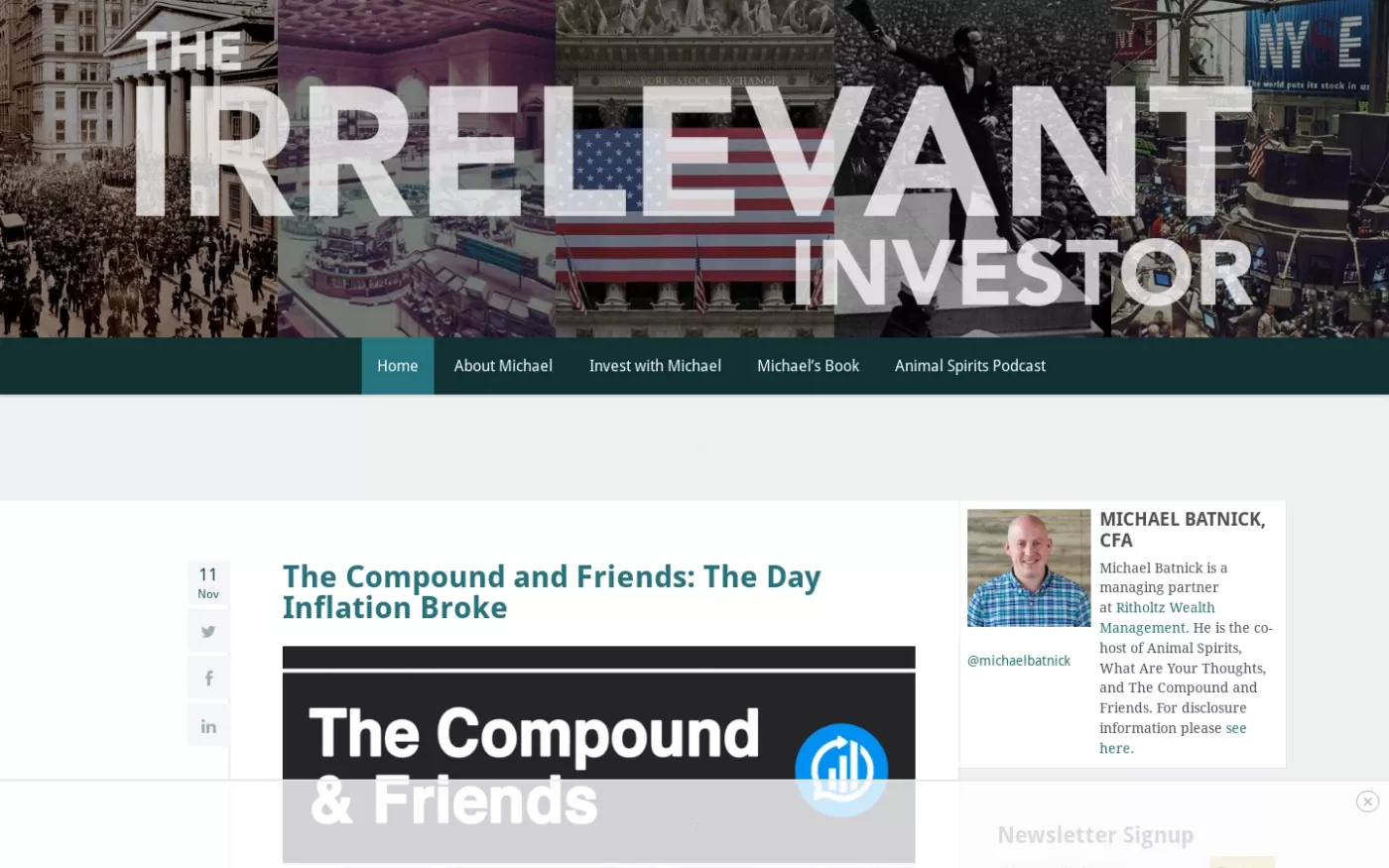
Screenshot of the The Irrelevant Investor Blog

The Irrelevant Investor is the blog of Michael Batnick, a CFA and Managing Partner at Ritholtz Wealth Management. He writes on market trends, portfolio strategy, and the costly mistakes even great investors make.

Screenshot of the Bullbear Blog

Bullbear Blog scans end-of-day stock data to spot momentum reversal signals. It tracks classic candlestick patterns like Bullish Engulfing, Harami, and Morning Star to give swing and momentum traders an early edge.

Frequently Asked Questions

What makes a good investing blog?

Original analysis. A good investing blog publishes its own research, not recycled headlines. Look for clear reasoning and a track record you can check. The best ones show how they reached a conclusion.

Are investing blogs free to read?

Mostly yes. Most investment blogs offer their core content for free. Some add paid newsletters, courses, or premium research. You can learn a lot before paying for anything.

Can you trust investing blogs for financial advice?

With caution. Blogs share opinions and education, not personalized advice. Treat them as a starting point, then confirm facts yourself. Watch for authors who only promote products they earn from.

How often should an investing blog publish?

Quality over frequency. Some strong blogs post daily; others publish a few times a week. Consistency matters more than volume.

Do you need experience to follow these blogs?

No. Many money blogs write for beginners and experts alike. Start with personal finance and index fund basics. Move to stock analysis and trading once the fundamentals click.

What credentials should the author have?

Relevant background helps. Look for CFAs, fund managers, analysts, or writers with years in markets. Credentials are not everything, but they signal real knowledge. A clear, honest voice matters just as much.

Are paid newsletters worth it over free blogs?

Sometimes. Free blogs cover most of what new investors need. Paid newsletters can add stock picks, data, or deeper fund research. Try the free content first, then decide if the upgrade pays off.

Types of Investing Blogs

Market News & Analysis Blogs. These cover daily moves in stocks, rates, and the economy. They help you make sense of headlines without the hype. Good ones add context, not just noise.

Value Investing Blogs. These focus on buying high-quality companies at fair prices. They dig into balance sheets and long-term fundamentals. Patience is the core theme.

Personal Finance Blogs. These cover budgeting, saving, retirement, and index fund investing. The focus is steady wealth building, not quick wins. They suit readers who want the basics done right.

Trading & Technical Analysis Blogs. Aimed at active traders, these track chart patterns and momentum signals. Topics include candlestick setups, entries, and risk management. Best for those comfortable with faster decisions.

Economics & Macro Blogs. These track data like GDP, jobs, and housing. They tie big-picture trends to your portfolio. Useful when you want the why behind a market move.

How to Choose an Investing Blog to Follow

Check the author's track record. See who writes the blog and what they have done in markets. Analysts, fund managers, and longtime investors bring real perspective.

Favor original work over aggregation. The best investment blogs analyze, they do not just repost news. If every post echoes the headlines, keep looking.

Match the blog to your level. Beginners want budgeting and saving guides. Active traders want charts and timely setups. Pick what fits where you are now.

Watch for hidden bias. Many blogs earn from affiliate links or product reviews. That is fine, but notice when the praise lines up with the payouts.